My love for thrifting guided me into the world a vintage collecting and let me tell you – there’s a lot out here to be found and loved on. Today’s blog is about a mommy doll that I found while shopping at a vintage store in Mount Clemens, MI.
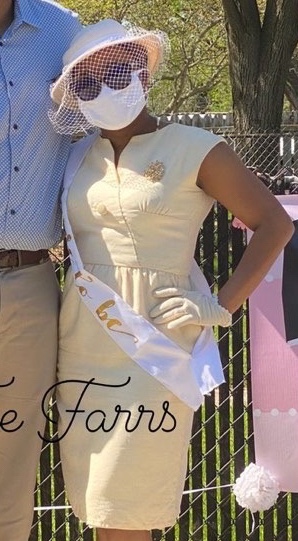
My purpose for visiting the store was to find a vintage women’s hat to wear at my bridal shower, but once I entered of course I got carried away.
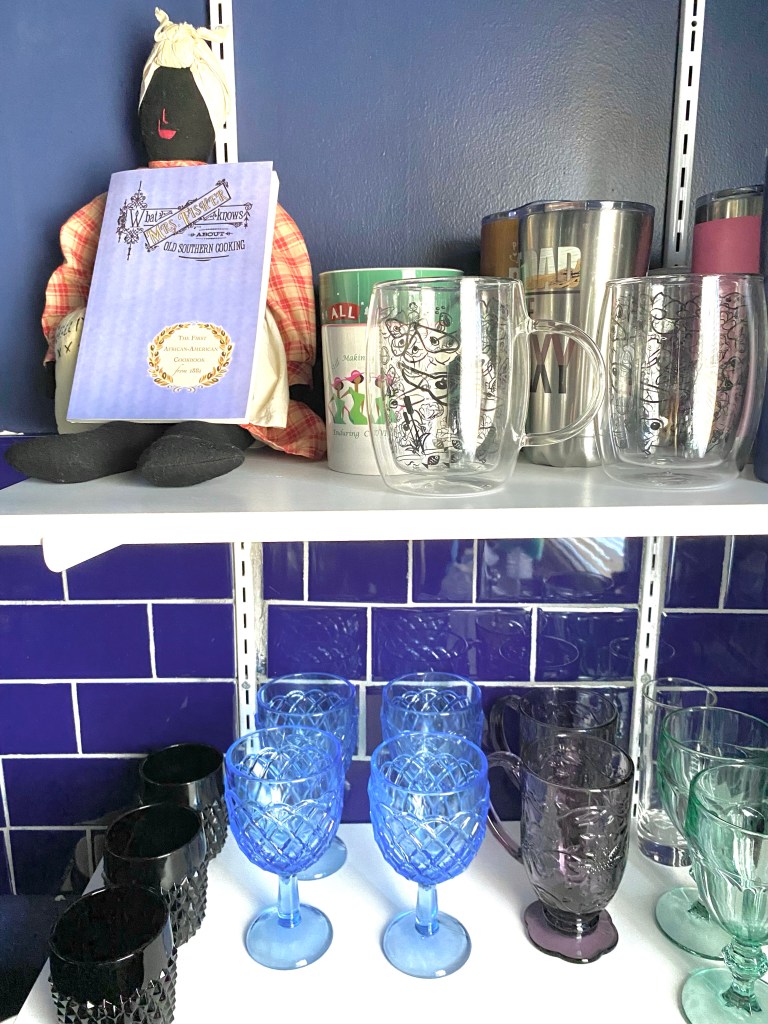
Let’s be clear, the store is very cute, small in size, and appeared to be run by a White family. So when I saw the doll, in this seemingly White establishment, I said “Oh, this is coming with me because not for one second will I allow an opportunity for a non-Black person to add a mammy doll to their home”. The doll was about $20 (which I thought was a steal for what this was) so I cashed out with my hat and doll and went along my way.
Once I got home, I decided to place Mammy on display in my kitchen for a number of reasons, but primarily because historically Black women have been responsible for preparing meals for their family, community, etc. When I look at her, i think of the ancestors who were forced to prepare meals for their enslavers as well as the ancestors who lovingly prepared meals for their family and friends. I think of my grandmothers and their relationship to food and cooking and I think of how I will engage my own daughter around cooking, food, and caretaking. It’s loaded! But critical that I had this piece to start a conversation in the kitchen with whomever visits and sees Mammy doll (I should probably come up with a different name).
The rich history of Mammy and Black Americana led to my desire to reclaim this artifact. As a researcher of Black womanhood, Mammy is an important part of Black culture and an integral tool in understanding the stereotypes of Black womanhood (that are present even today). At her core, Mammy is a loving, non-threatening, asexual, care taker who provides for the needs of others often before those of her own (specifically those of White folks). As a Black woman and now wife and mom, my relationship to and understanding of mammy has drastically shifted, especially as I re-enter the workplace.
Have you ever considered how you are being “mammy-ed” as you move through the world? Or how you are unconsciously or consciously placing the mammy stereotype on the Black women with whom you interact? I’ll leave you with that thought…
Naturally,
Alescia

 Naturally, Alescia